Discover the story of Olney’s lacemakers
For centuries, lacemaking was woven into everyday life in Olney. Behind the beauty of the finished lace lies a fascinating story of extraordinary skill, long hours of work, family life, hardship and enterprise.
Our dedicated Lacemakers Room brings that story to life through lace, tools, photographs, documents and objects from our collection.
Olney and the lace trade
From the late 17th century into the early 20th century, hundreds of local people earned money from lacemaking. Women and girls formed the majority of the workforce, although men and boys also learned the craft.
Working at home, lacemakers created intricate patterns using a pillow, pins, thread and wooden bobbins. Their finished lace was sold to dealers and could travel far beyond Olney.
By the late 18th century, more than 1,200 lacemakers were living and working in Olney and the surrounding villages.
William Cowper saw their lives at first hand. In his poem Truth he wrote:
“Yon cottager, who weaves at her own door,
Pillow and bobbins all her little store…”
Cowper championed the cause of local lacemakers, while his friend John Newton welcomed them to his crowded prayer meetings.
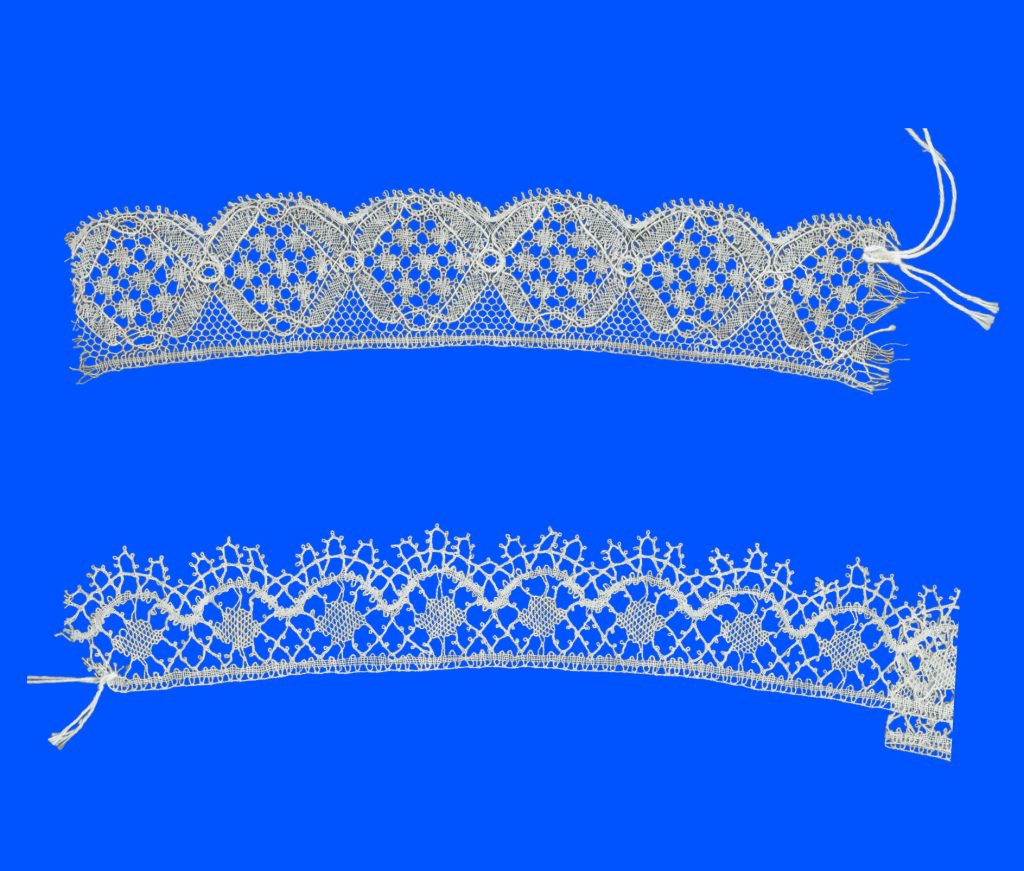
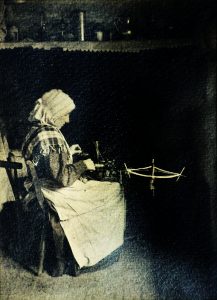
Beautiful lace – difficult lives
The delicacy of the finished lace can disguise the difficult circumstances in which it was often produced.
Lacemaking required considerable skill, concentration and patience. For many families it was not a genteel pastime but an essential source of income. Long working hours, poor eyesight and illness were among the realities faced by working lacemakers, and children could begin learning the craft at an early age.
The Lacemakers Room explores these human stories alongside the beautiful objects they produced.
Look closely at the tools of the trade
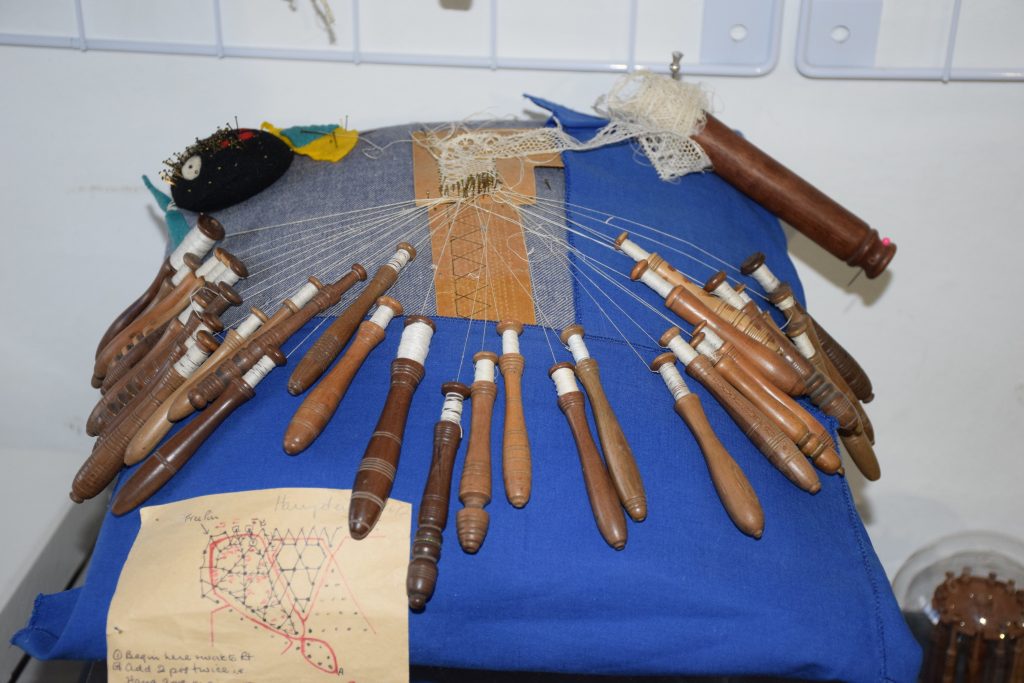
A lacemaker’s equipment could be surprisingly simple: a lace pillow, dozens of bobbins, pins and a pattern or pricking.
In the room you can see pillows and bobbins alongside some more unusual objects associated with lacemaking, including a flash stool and a dickie pot.
Together, these everyday objects help us imagine the working lives behind the lace.
From Olney to the wider world
Olney’s lacemaking story did not end with the Georgian period.
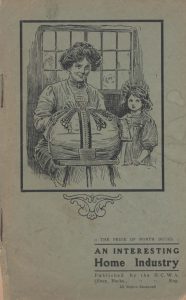
The collection includes material relating to the Bucks Cottage Workers’ Agency, established in Olney and associated with the Armstrong family. Its Buckinghamshire handmade pillow lace was promoted well beyond the local area.
In 1911 the Agency was awarded a Gold Medal and Diploma at the Festival of Empire and Imperial Exhibition at Crystal Palace for the excellence of its workmanship.
Its surviving catalogues and advertising material provide a fascinating glimpse of how Buckinghamshire lace was marketed to fashionable customers — including examples of elaborate christening robes, handkerchiefs and other pieces.
Explore the lace itself
The Lacemakers Room contains examples of English and continental lace dating from the 17th century to the modern day.
Look closely and you can discover how styles changed over time, including examples of Buckinghamshire lace, known for its fine ground and delicate floral patterns, and Bedfordshire lace, which developed in the 19th century and became known for its more flowing designs.
Displays are changed periodically, allowing different pieces from the collection to be brought out and enjoyed.
Keeping the threads alive
Our lace collection is cared for by a small, dedicated team with specialist knowledge of lacemaking.
New pieces continue to come to the museum, sometimes from families in Olney and the surrounding area and sometimes from much further afield. Each can bring with it a story waiting to be uncovered.
The team researches and identifies lace, traces family histories and helps preserve knowledge of the people who practised the craft. Their expertise has also supported researchers and contributed to publications and television programmes.
Through their work, the museum is not simply preserving beautiful lace. It is preserving the stories of the people who made it.
Come and discover the Lacemakers Room
See exquisite lace, historic bobbins and working equipment, discover the lives of Olney’s lacemakers and explore a craft that was once part of everyday life in the town.
The Lacemakers Room is included with admission to the Cowper & Newton Museum.
Please note: the Lacemakers Room is at the top of the museum and is reached by flights of stairs.